

Entomological database
Explore the world of entomology with our smart database. Simply click the button below to ask our AI Assistant about any insect or species, and get instant, detailed profiles featuring scientific classifications, key traits, habitats, and fascinating fun facts.

Praying Mantis (Mantis religiosa)
Classification: European Mantis (Mantis religiosa)
)Key Features: Typically 5 to 7 cm long, bright green or brown, featuring large compound eyes and iconic raptorial front legs kept in a "praying" position.
Habitat & Distribution: Native to Europe, Asia, and Africa, commonly found in warm grasslands, meadows, and sunny gardens.
Fun Fact: Females are famous for sexual cannibalism, sometimes consuming the male during or after mating to gain essential nutrients for egg production.

European Rhinoceros Beetle (Oryctes nasicornis)
Classification: European Rhinoceros Beetle (Oryctes nasicornis)
Key Features: Large and robust body (up to 4 cm), dark reddish-brown color. Males feature a prominent, curved horn on their head resembling a rhinoceros.
Habitat & Distribution: Widespread across Europe, North Africa, and parts of Asia. They live in woodlands, parks, and decaying wood heaps.
Fun Fact: Despite their heavy and armored appearance, adult rhinoceros beetles are excellent fliers, though they spend most of their time hidden in wood or compost.
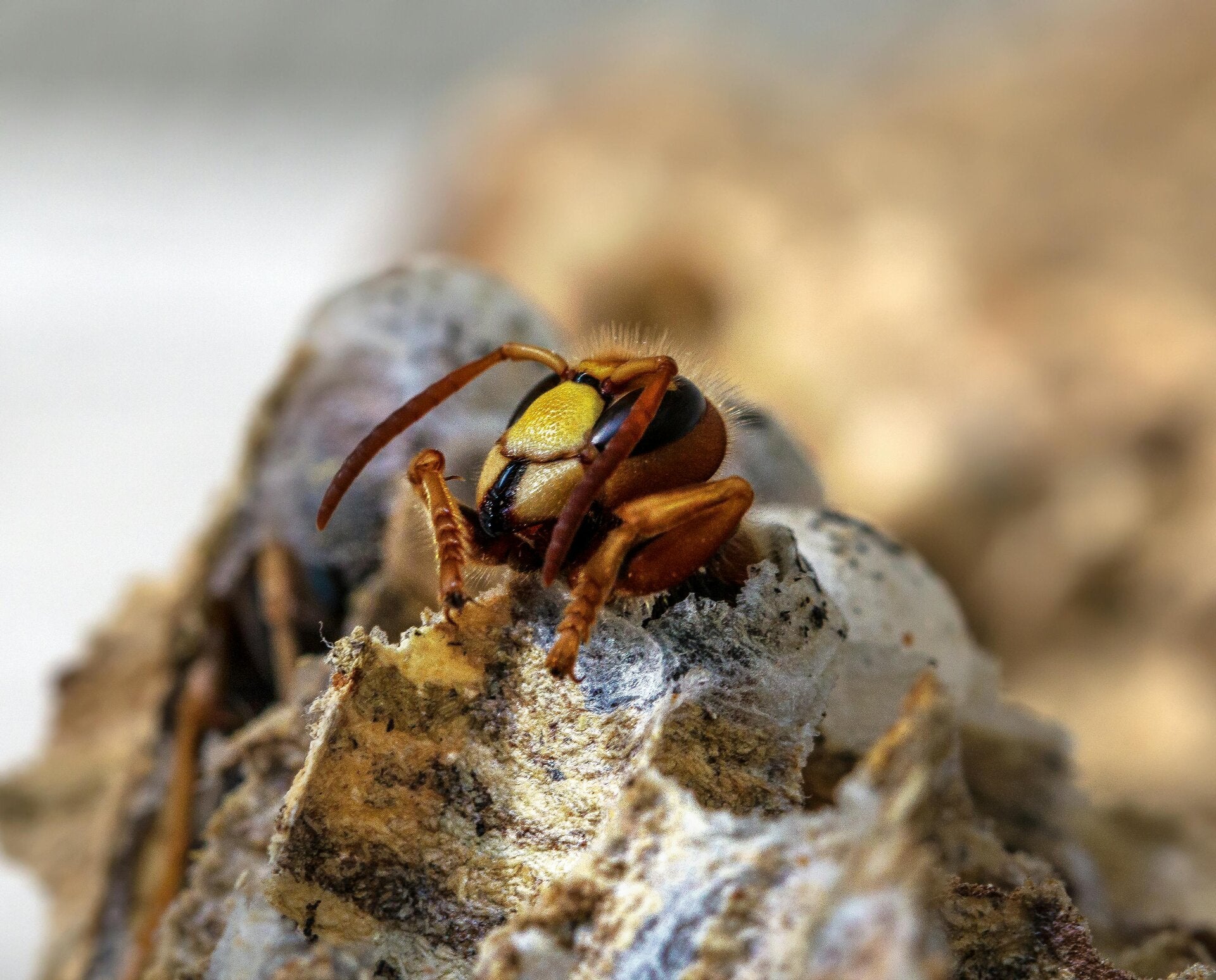
European Hornet (Vespa crabro)
Classification: European Hornet (Vespa crabro)
Key Features: The largest eusocial wasp in Europe (up to 3.5 cm), with a distinct reddish-orange and yellow striped abdomen and a reddish head.
Habitat & Distribution: Found throughout Europe, Russia, and parts of North America. They prefer hollow trees, woodlands, and sheltered garden areas.
Fun Fact: Unlike many other wasps, European hornets are active during the night and are attracted to artificial light, often flying around windows after dark.
Create Your Own Website With Webador